Updated October 23, 2026 11:48AM
Why Are Pacific Northwest Ski Resorts so Obsessed With Bigfoot?
From mascots to merch, Pacific Northwest ski resorts have gone all in on Sasquatch. Here’s what’s behind the legend and the lift-line lore.
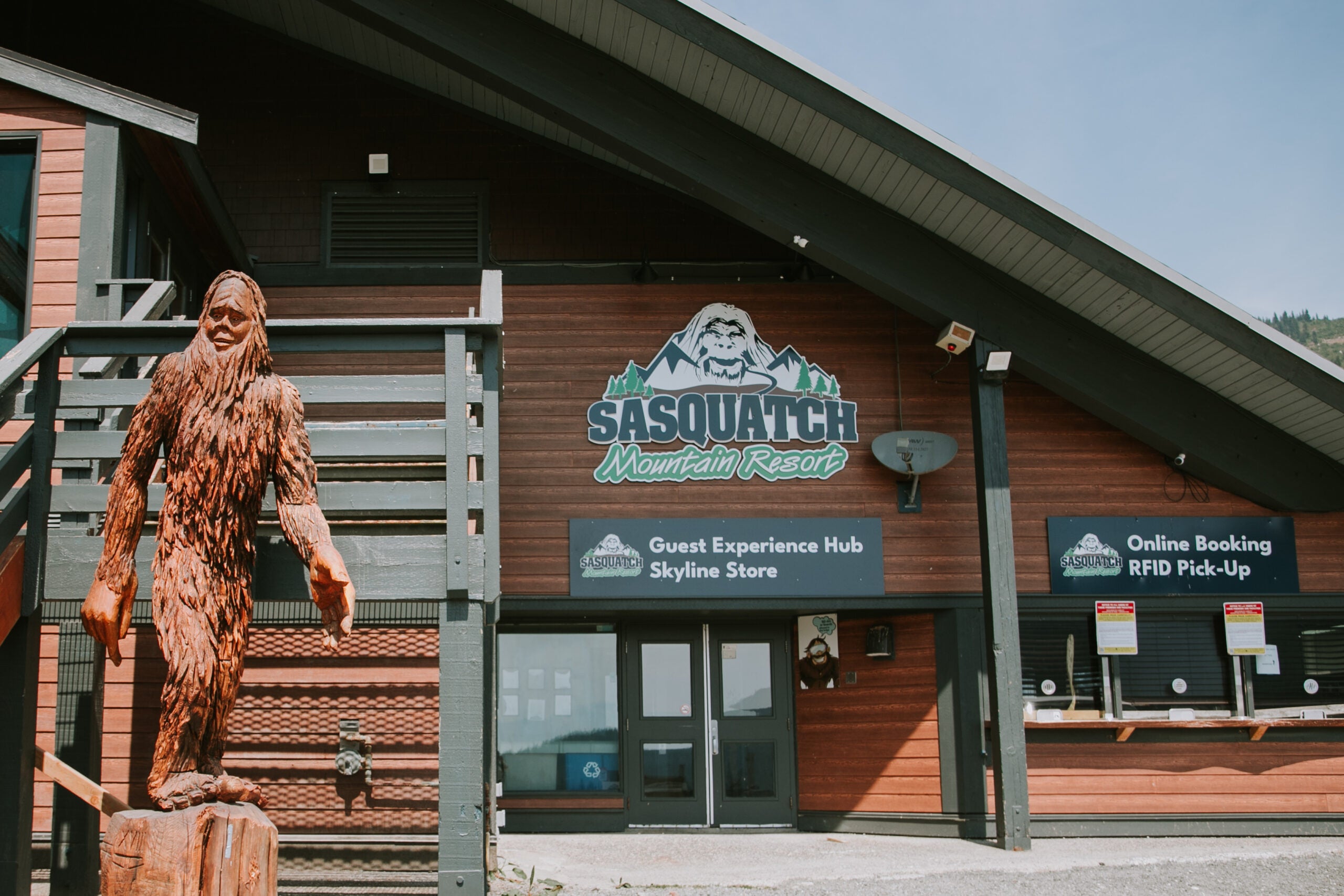
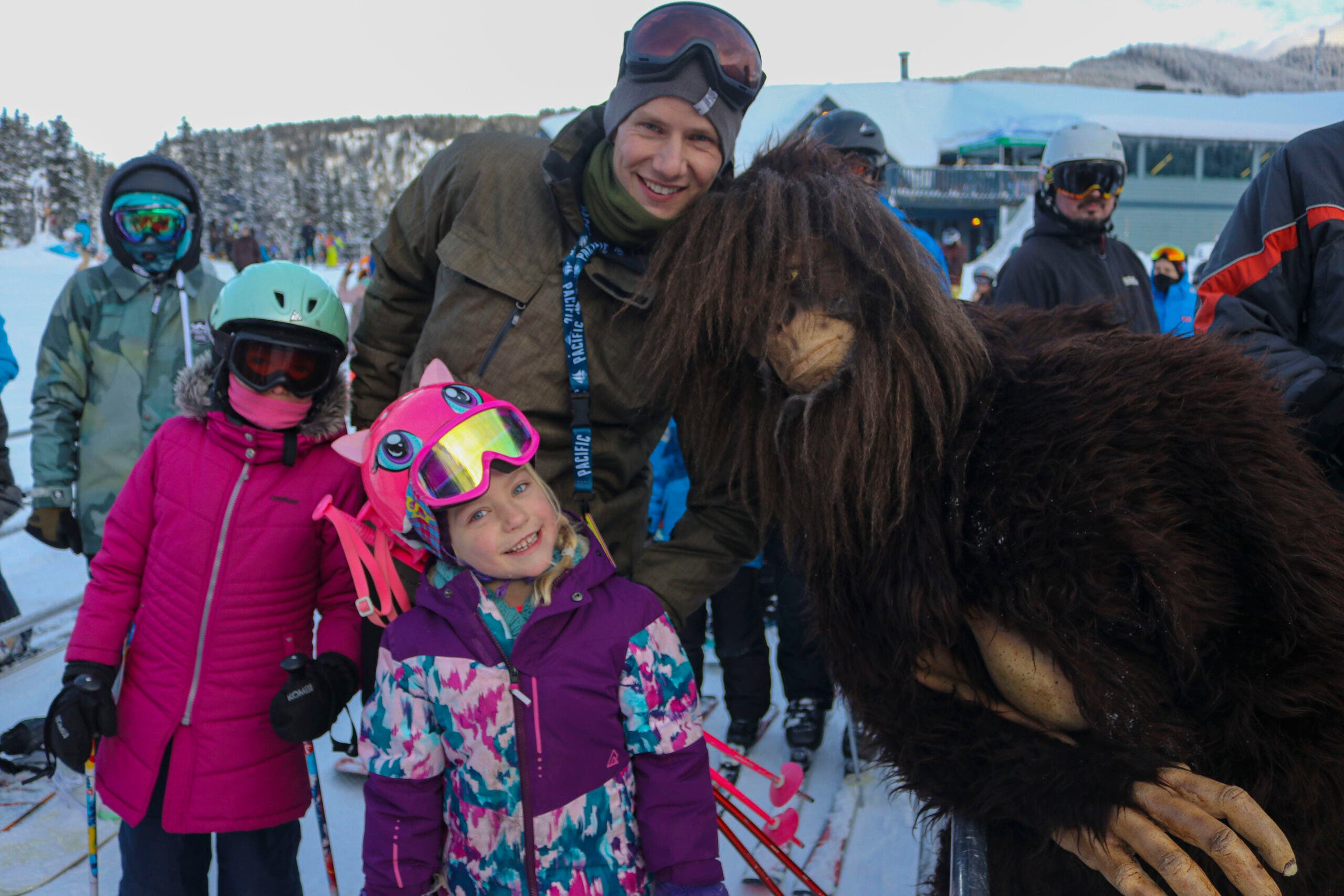
(Photo: Courtesy of Sasquatch Mountain Resort )
Spend enough time skiing in the Pacific Northwest, and you’ll start seeing Bigfoot everywhere. The mythical creature appears in ski resort names, chairlifts, trail names, mountain restaurants, and even sculptures overlooking the slopes. In a region known for its towering forests and rugged mountains, Sasquatch has become part of ski country’s identity.
But why has Bigfoot become such a familiar presence in the Pacific Northwest, and how did the legendary creature find its way into the region’s ski culture?
Bigfoot Is Everywhere in PNW Ski Country
At Mission Ridge in Washington, an 11-foot sculpture near the top of Chair 2 changes its appearance with the seasons. Built from recycled steel and chain, it looks shaggy and snow-covered during ski season. “In winter he’s coated in rime and snow and becomes a Yeti,” says Matt Kung, the resort’s marketing and data systems manager. “Come summer, the rusted chain shows through, and he’s a Bigfoot walking over the ridgeline.”
Bigfoot sightings and folklore are part of the culture in the Pacific Northwest’s mountain communities, too. On the way to Stevens Pass in Washington, skiers can stop at Espresso Chalet, a roadside coffee stand with a giant Sasquatch statue, Bigfoot-themed decor, and souvenirs. The café even ties back to the 1987 film Harry and the Hendersons, which featured the iconic creature. Farther north, at Big White Ski Resort in British Columbia, Sasquatch Sushi brings the theme to the mountain’s dining scene, with a name that nods to the region’s fascination with Bigfoot.
At Mt. Hood in Oregon, the same forests that draw skiers also fuel Bigfoot superstitions. The area reportedly has more Bigfoot sightings than anywhere else in the state, making a day on the slopes feel like an adventure into Sasquatch country. With some of the Pacific Northwest’s best skiing and snow, Mt. Hood offers plenty of opportunities to explore the terrain where the legend lives on.
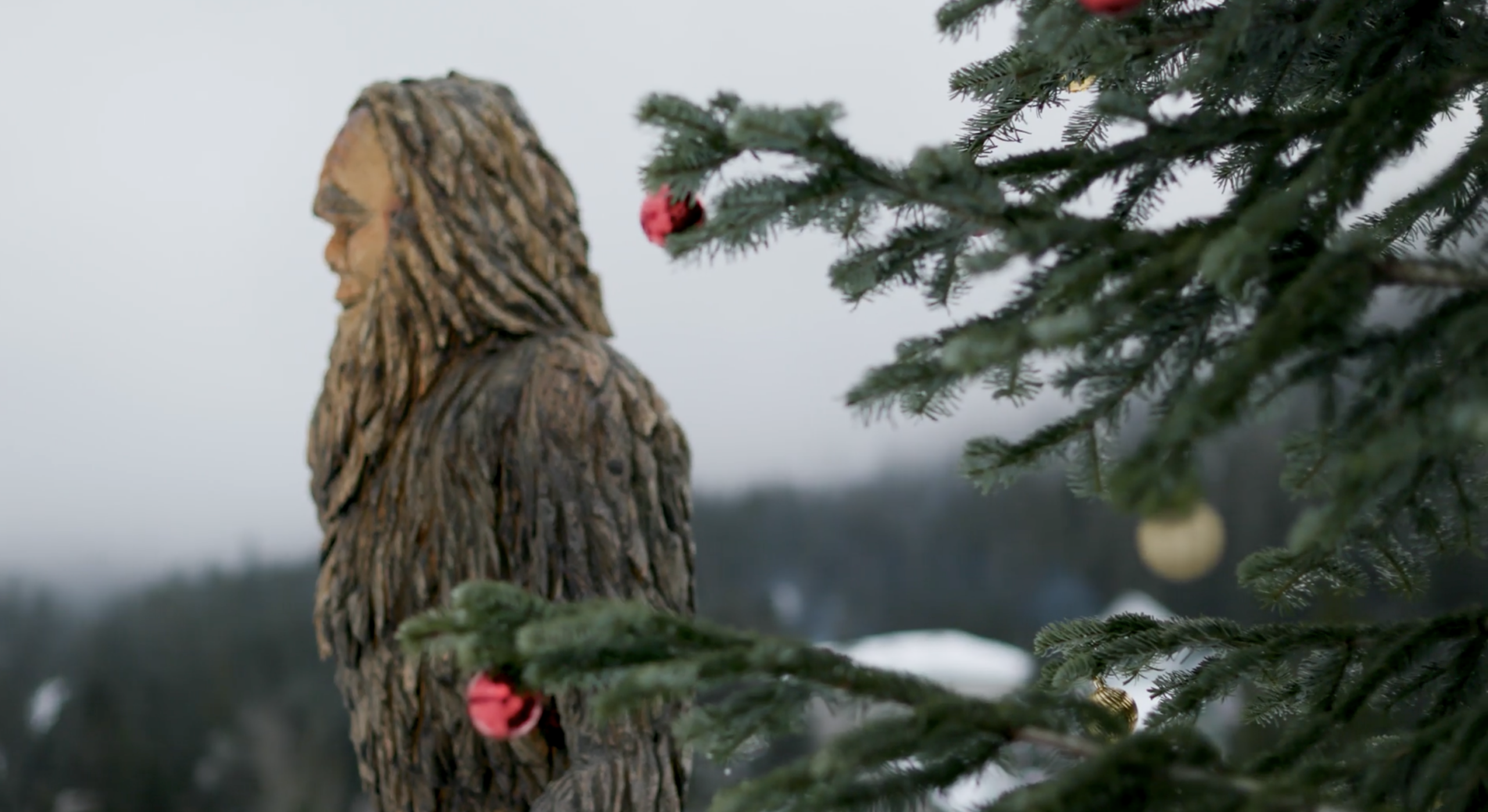
At Sasquatch Mountain Resort in British Columbia, they take it a step further, weaving the myth into the mountain’s identity, from the resort name to the Sasquatch Triple Chair and Bigfoot run. The resort was previously known as Hemlock Valley Resort before new ownership rebranded it to reflect the area’s connection to Sasquatch folklore.
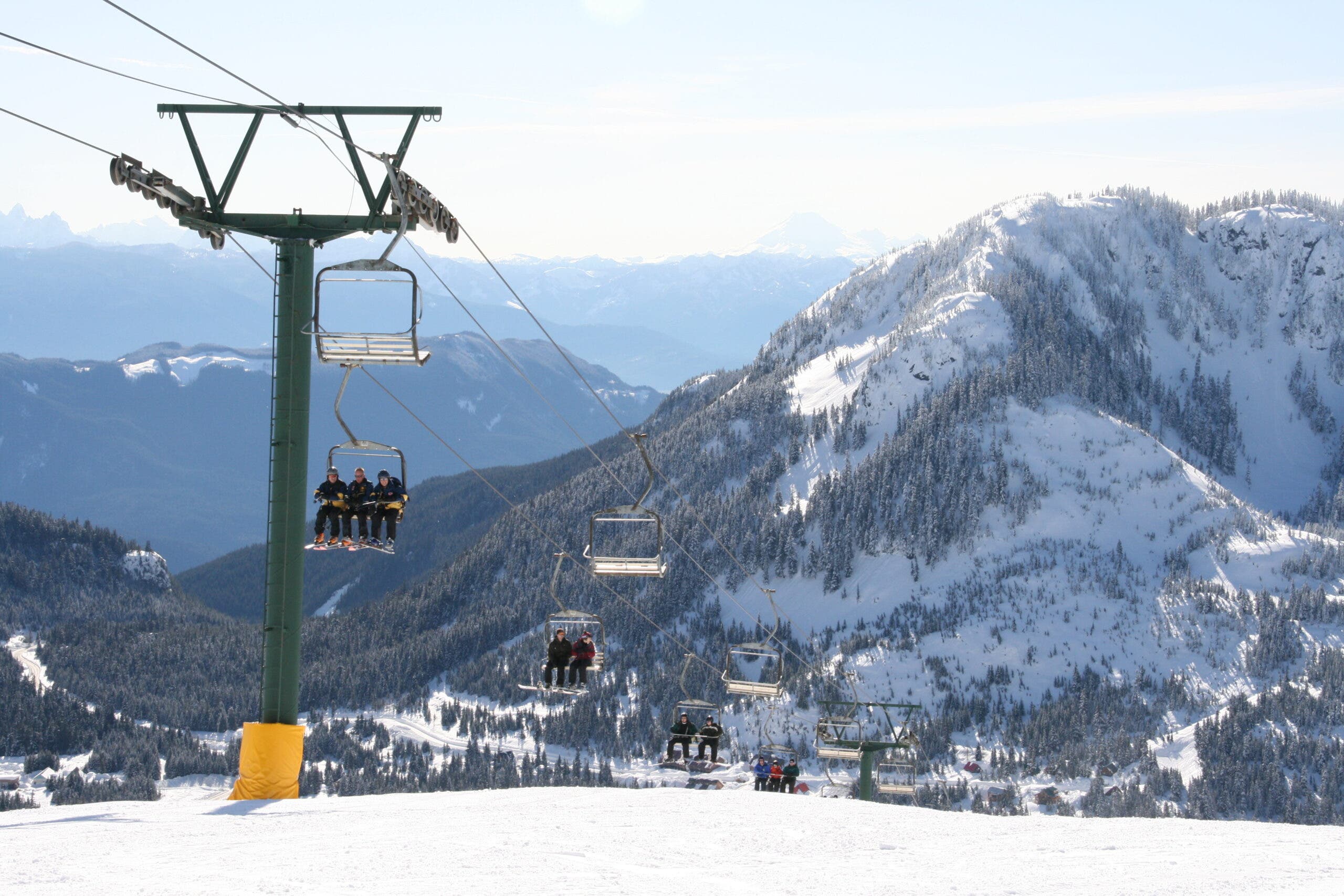
“Rather than adopting a generic mountain identity, we chose to celebrate something that is uniquely tied to the Harrison and Fraser Valley region,” says Nikita Romane, the resort’s inside operations manager.
ADVERTISEMENT
The resort’s name reflects a broader connection between Sasquatch and the surrounding region. The nearby Harrison River Valley has embraced its reputation as Sasquatch country, with local folklore, reported sightings, and the area’s rugged forests helping keep the tale alive. Harrison Hot Springs even has a Sasquatch Museum dedicated to the creature.
Why Bigfoot and Skiing Go Together
Cliff Barackman, curator of the North American Bigfoot Center, sees a natural connection between Bigfoot and outdoor recreation.
He notes that reported encounters often occur in forests, mountains, river valleys, and other remote areas. Hikers, campers, hunters, anglers, and skiers spend time in these environments, making the outdoors a natural setting for Bigfoot stories.
The legend also has a cultural side. “Bigfoot has become such a recognizable symbol of the Pacific Northwest that it almost functions as a regional mascot,” Barackman says. He describes the creature as a symbol of wilderness, mystery, and the idea that some places still exist where people don’t know everything happening around them.
ADVERTISEMENT
It’s easy to see how that idea translates to skiing. Skiers venture into the trees for fresh snow and to explore remote terrain, often in places where the forests stretch for miles. Bigfoot, a creature said to inhabit those same wild places, fits naturally into the experience.
Reported sightings aren’t scientific proof that Bigfoot exists, but the legend has become part of the Pacific Northwest’s identity. Ski resorts have found a way to bring that folklore onto the mountain, giving skiers a playful reminder of the region’s wild side.
A Legend Rooted in the Region
Bigfoot’s connection to the Pacific Northwest goes beyond ski resort and restaurant branding. In British Columbia, the name Sasquatch comes from Sásq’ets, a word in the Halq’eméylem language associated with the Sts’ailes people that describes a “hairy man.” Sasquatch stories have long been part of Indigenous oral traditions in the area.
Nikita Romane at Sasquatch Mountain Resort recognizes that the mountain’s history extends beyond its playful branding. “While the resort embraces the Sasquatch legend as part of its identity, it is important to recognize that stories of Sasquatch-like beings have deep roots in the Indigenous cultures of the Pacific Northwest,” she says. She adds that the resort operates on the unceded territory of the Sts’ailes people and strives to respect those cultural origins while celebrating the legend.
ADVERTISEMENT
A Little Mystery on the Mountain
For skiers, Bigfoot adds a little fun to a day on the slopes. A towering sculpture, a themed restaurant, or a beginner carpet named Littlefoot gives visitors something unexpected to discover along the way.
To Kung, Bigfoot embodies the freedom of the outdoors. “He’s never been pinned down; he goes wherever he wants, and he belongs completely to the wild places most people only visit,” he says.
In the Pacific Northwest, where forests and mountains have long fueled Bigfoot stories, the creature makes a fitting ski-country mascot. Skiers may come for the powder, but a little mystery along the way certainly doesn’t hurt.