Published October 23, 2026 08:51AM
The U.S. Women Have Something to Prove in Sölden This Weekend. Here's Who—and How—to Watch.
The U.S. star leads a deep women's team into the World Cup opener in Sölden, where they’re looking to kick off another big season.
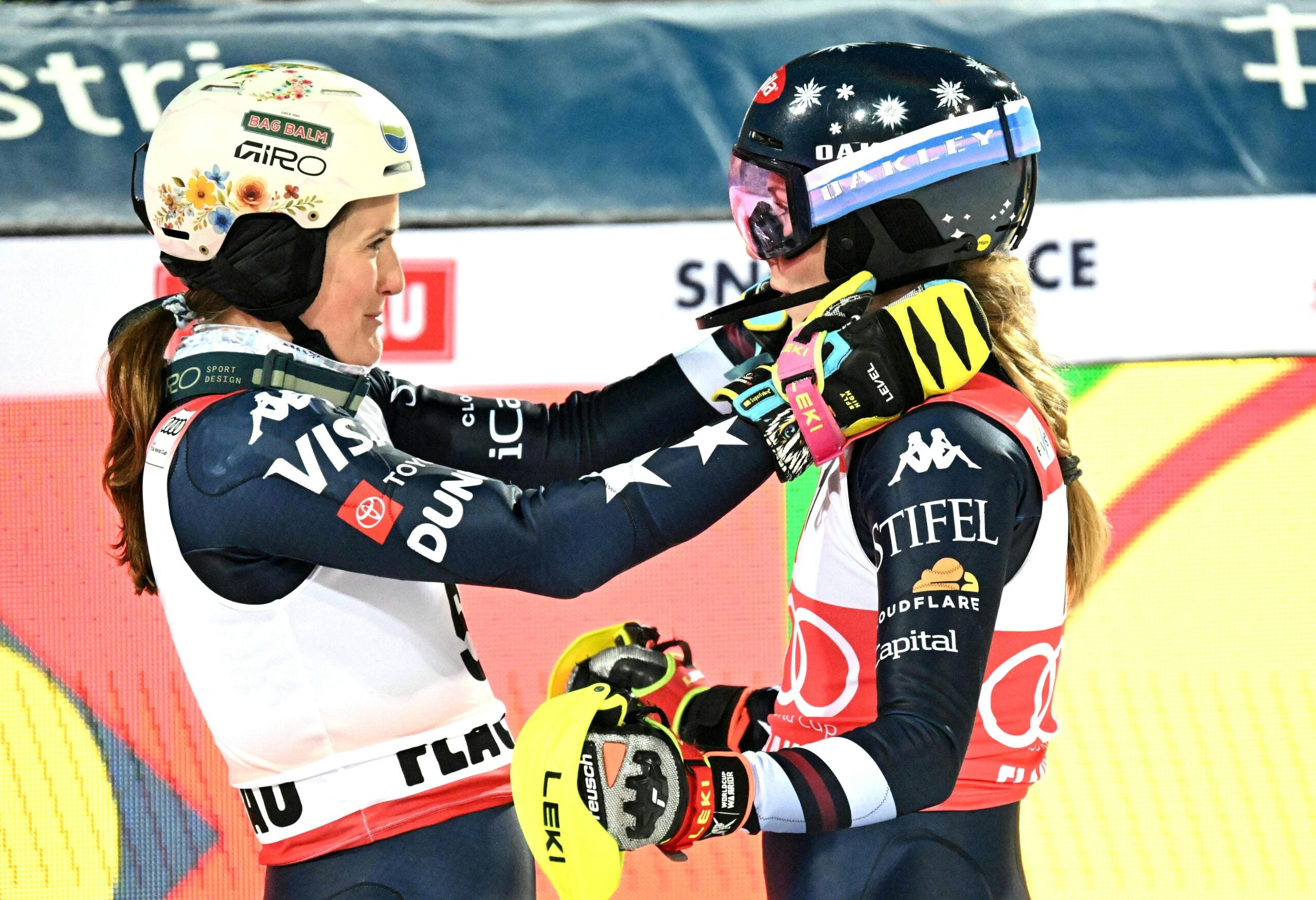
U.S. Alpine teammates Mikaela Shiffrin and Paula Moltzan are back on the slopes this weekend at Sölden. (Photo: Barbara Gindl/APA/AFP via Getty Images//Austria OUT)
The FIS Alpine World Cup opener—a giant slalom on the Rettenbach Glacier above Sölden, Austria—can set the tone for the season ahead. Last year, the U.S. women made an emphatic statement, locking up six of the top 19 places. Paula Moltzan led the charge with a podium finish, while Mikaela Shiffrin finished fourth and Nina O’Brien sixth.
The team carried that momentum through the 2025–’26 season, helping the United States capture the women’s Nations Cup for the first time ever. Awarded to the nation whose skiers accumulate the most World Cup points over the course of the season, the title reflected the depth of the U.S. roster, particularly in the technical events. Shiffrin and Moltzan combined for 16 World Cup podiums in slalom and GS, while O’Brien, AJ Hurt, Elisabeth Bocock, and Katie Hensien contributed valuable points.
Now comes the question: Can the U.S. women do it again at this year’s World Cup opener, Oct. 24-25 on Sölden’s Rettenbach Glacier?
Who’s Competing in Sölden?
The core of last year’s Sölden contingent is back, with the women who scored World Cup points at the opener returning to take another shot at the Rettenbach Glacier.
ADVERTISEMENT
Leading the charge is Shiffrin, who is putting renewed emphasis on giant slalom this season. Long dominant in slalom, she’s turning her attention to the event that upended her career two years ago. A crash in the 2024 Killington GS left her with a serious abdominal puncture wound. Returning to the discipline meant working through post-traumatic stress, but Shiffrin steadily rebuilt her confidence and climbed from 30th in the GS standings to fourth last season.
Now, she’s ready to see how much further she can go.
“I really wonder where I can take GS,” Shiffrin said earlier this fall. “I have a ton of questions about it in my own mind, and I want to find out.”
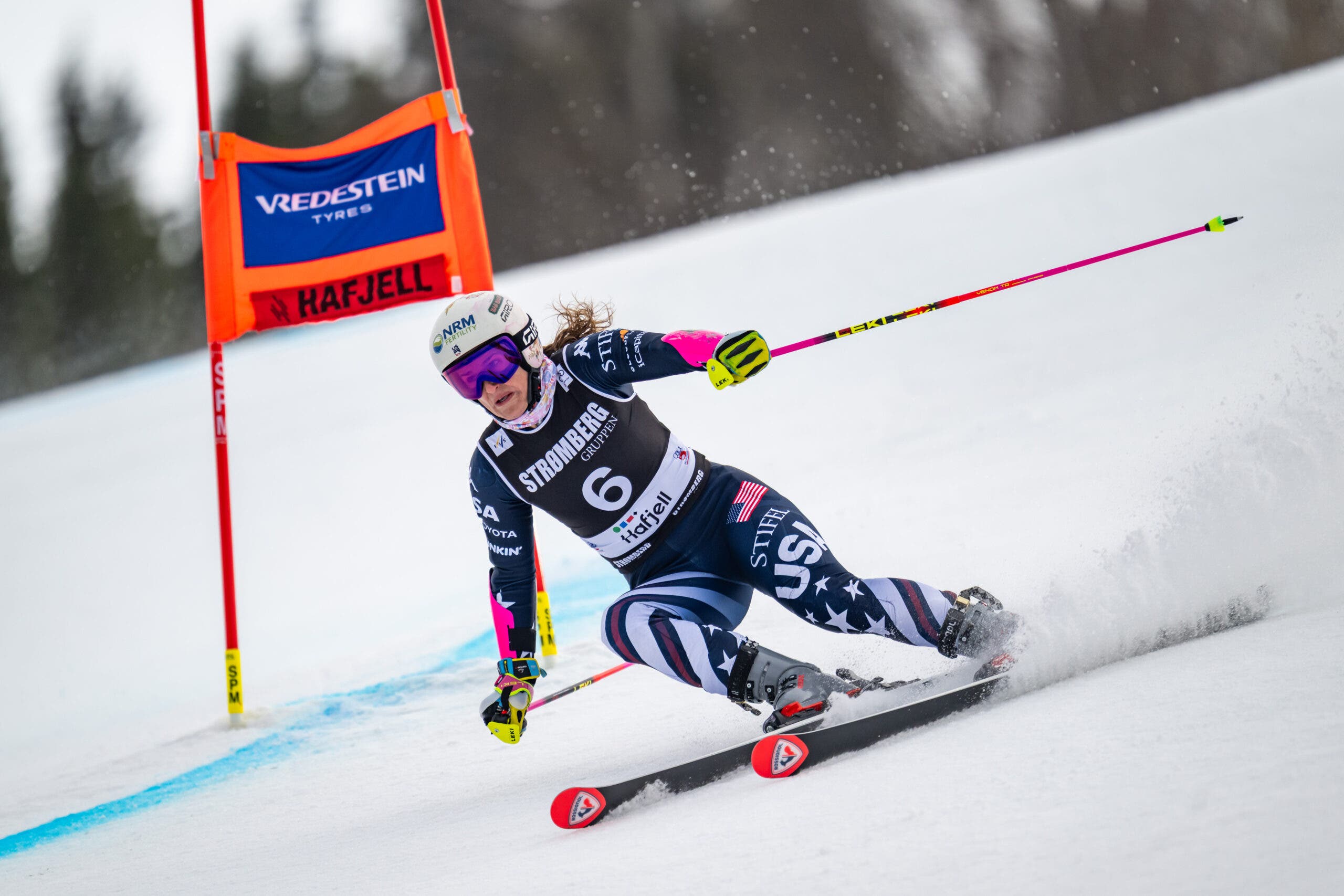
Moltzan also finished last season on a high note, bookending her World Cup GS campaign with runner-up finishes in Sölden in October and Åre, Sweden, in March. Of her 10 career World Cup podiums to date, five came last season, four of them in GS.
ADVERTISEMENT
At 32, and entering her eighth full season on the World Cup circuit, Moltzan is looking for a fresh source of motivation. She made a major equipment change, joining VAN DEER-Red Bull Sports, the ski brand founded by eight-time overall World Cup champion Marcel Hirscher. The move offers her a chance to help shape the next generation of women’s slalom and GS skis.
For Moltzan, the motivation goes beyond a new logo on her skis. “My route of inspiration is trying to develop this whole brand-new line of women’s equipment.”
She spent the off-season testing skis to find the right set-up. While her ambitions remain high, she’s approaching the challenge with a little more patience.“I was truthfully not intending to switch ski brands this year after such an incredible season,” Moltzan said. “But the opportunity to develop and create a line of skis that I have a lot of influence on is something I’m really excited about.”
O’Brien, 28, is chasing a milestone of her own: her first World Cup podium. She recorded a career-best fifth-place finish in GS before the 2026 Olympics, then delivered one of the Games’ standout GS second runs, posting the fastest time in the second run to climb from 29th to 20th overall.
ADVERTISEMENT
AJ Hurt, 25, who made her second Olympic team last winter, also returned to the GS top 10 last season after rehabbing a hip injury suffered when she straddled a gate in training in the early season.
Katie Hensien, 26, will be looking to recapture the form that earned her a career-best fourth at Sölden in 2024. She too was injured early last season, fracturing her tibia after straddling a gate in training. Although Hensien qualified for the 2026 Olympics, she had to withdraw as she continued to recover.
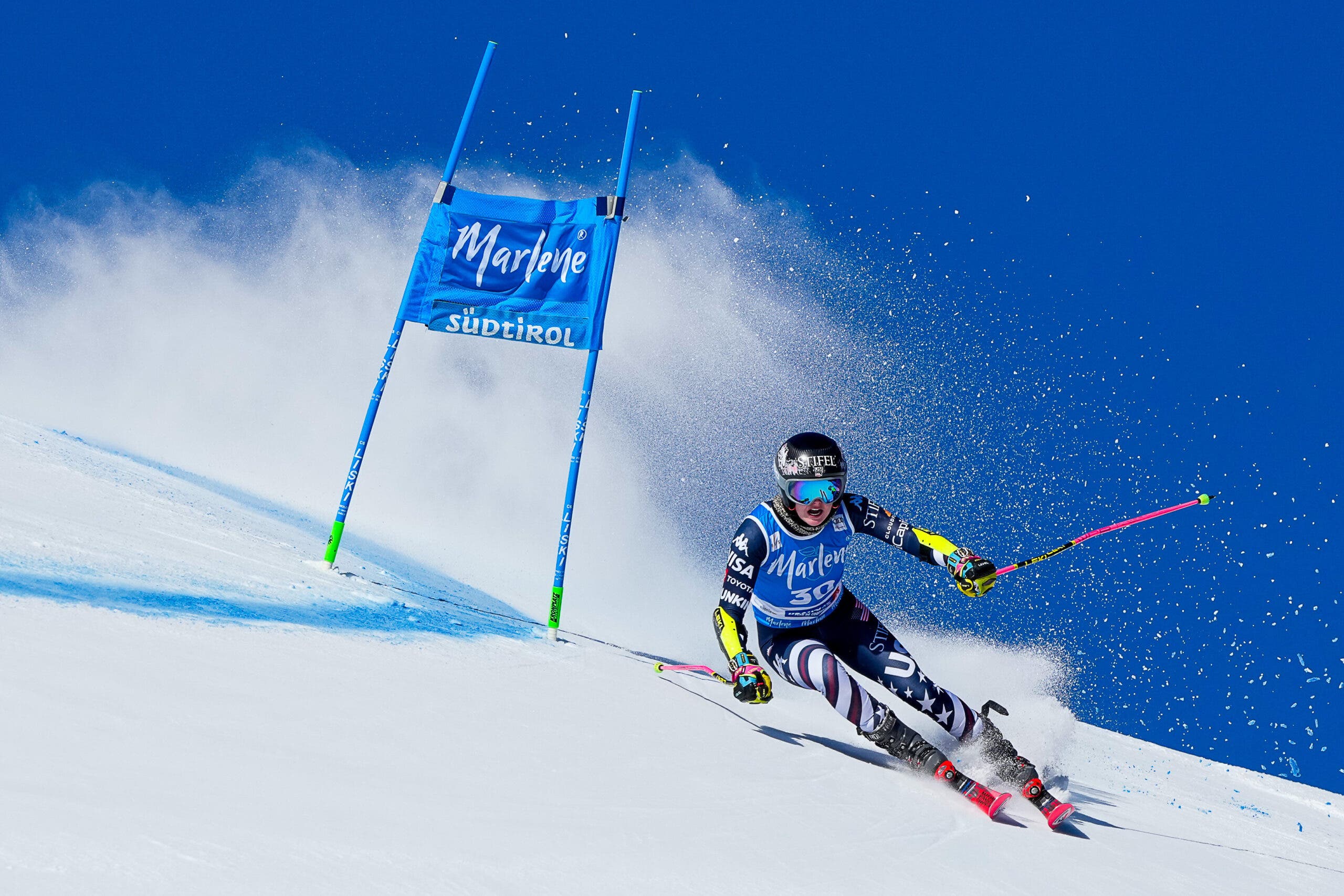
Then there’s Elisabeth Bocock, 21, one of the team’s rising young talents. She made her World Cup debut in 2023 and announced herself a year later by finishing the first run of the Killington GS in eighth place. Last winter, she appeared on track to earn her first Olympic team selection, but a string of DNFs in her primary event, giant slalom, ultimately derailed that bid. She still put together several top-15 World Cup finishes and closed the season with a silver medal in GS at the world junior championships. She also won her second national GS title last March.
ADVERTISEMENT
For Bocock, competing alongside some of the world’s best comes with its share of pressure—but also a built-in advantage. Training with Shiffrin, Moltzan, O’Brien, and the rest of the U.S. tech squad gives her a daily benchmark for what it takes to succeed at the highest level.
“If you’re having a good day in training, if, say, you beat Paula or Nina, and you know that they win [World Cup] runs, you could be beating the entire world,” Bocock said. “But also, if you’re not skiing well, you can put it in perspective, like, okay, the people who are the best in the world are beating me. I will still be okay in the grand scheme of things. It can be reassuring while also kind of a motivator.”
“My skiing ability has only benefited from having such a good team around me and pushing me to be better in training every day,” she added. “My career is at a higher level than it would have been if I was not surrounded by these girls.”
A Summer of Chasing Snow
The U.S. women arrived in Sölden last week after a globe-trotting offseason in search of consistent snow and quality training. The conditions weren’t always cooperative. As Bocock put it, “Europe was melting, in Chile it snowed an absurd amount, and in New Zealand, it was raining.”
ADVERTISEMENT
The result was a summer of adapting on the fly rather than stringing together long blocks of ideal training. “There wasn’t a massive block of good training days,” Bocock said, “but I’m still really excited. I think we got what we needed.”
Not every day had to be about gates and split times, though. Moltzan remembered the powder skiing in Chile as a welcome change of pace. “We free skied powder for a couple of hours, then went to a place called Tío Bob’s, which is the après-ski spot in Portillo. Sometimes it’s good to have a great ‘life day.’”
That balance could prove valuable as the team heads into another demanding winter. With Shiffrin embracing a new challenge, Moltzan exploring the possibilities of new equipment, and a deep supporting cast hungry to make its mark, the U.S. women have plenty of reasons to be optimistic.
How to Watch
In previous years, you needed three streaming services to watch World Cup ski races. Finally, we only need one: U.S. Ski & Snowboard, NBC, and FIS have a new broadcast and streaming structure for the 2026-27 season. Every alpine World Cup and world championship will stream live on Peacock, and a new free YouTube channel and FAST channel—both called Ski & Snowboard World Cup. Tune in this weekend to watch the U.S. women kick off their World Cup seasons.